Live
kaela Cheffins – Team GB Paralympics Dressage
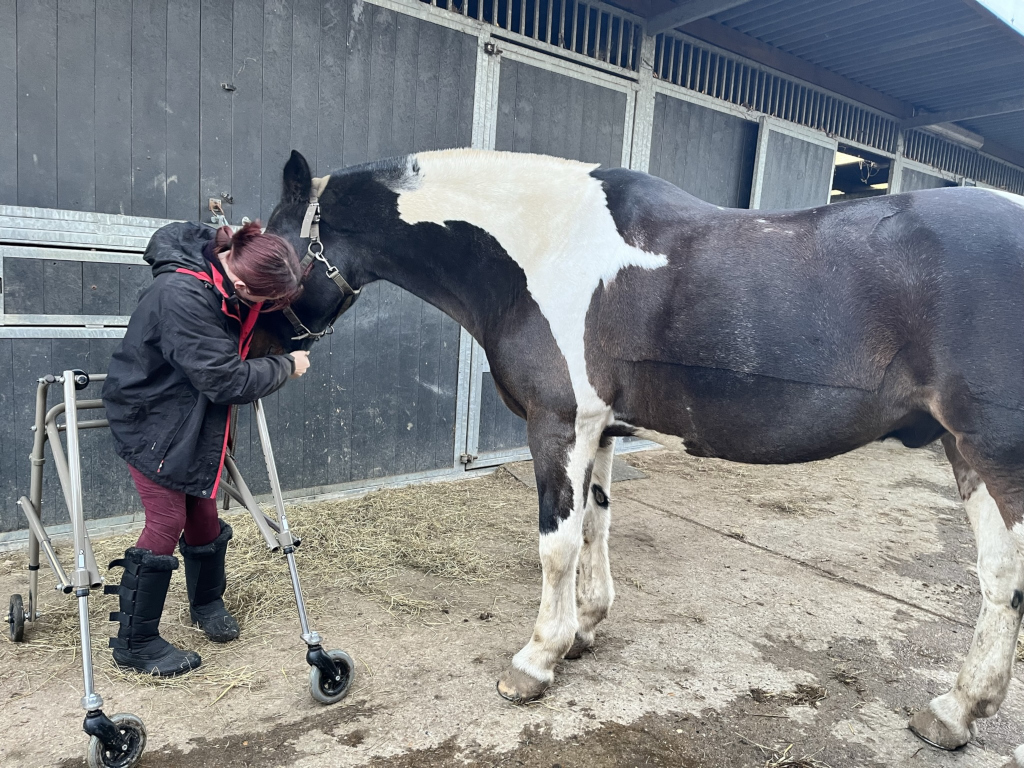
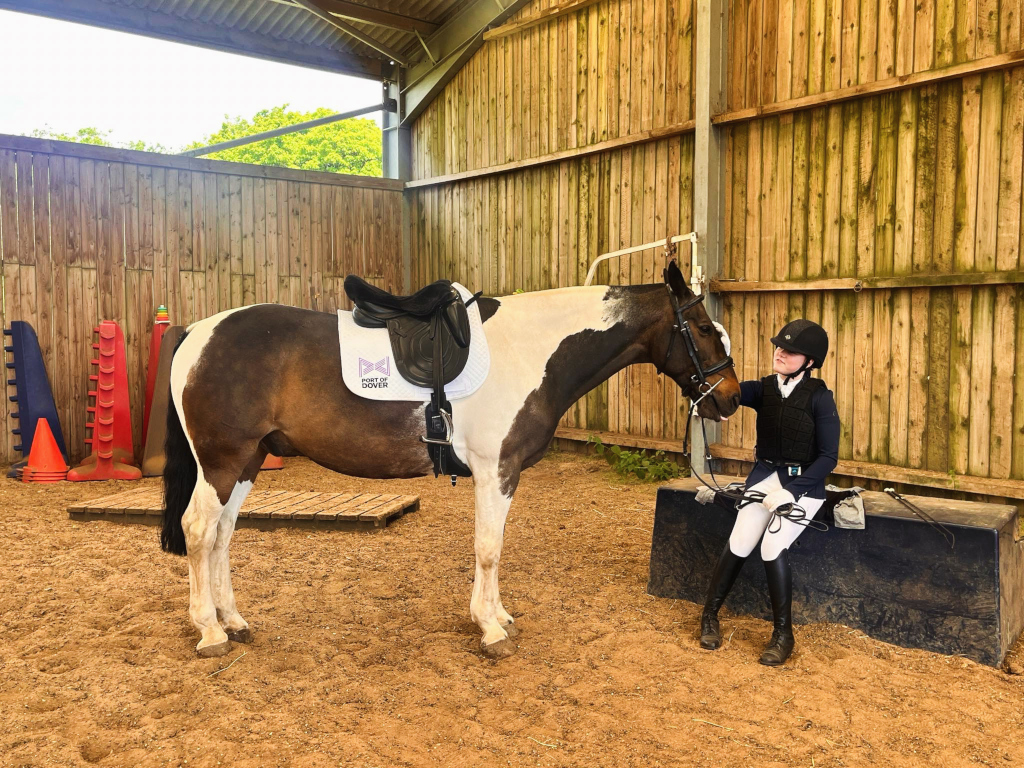
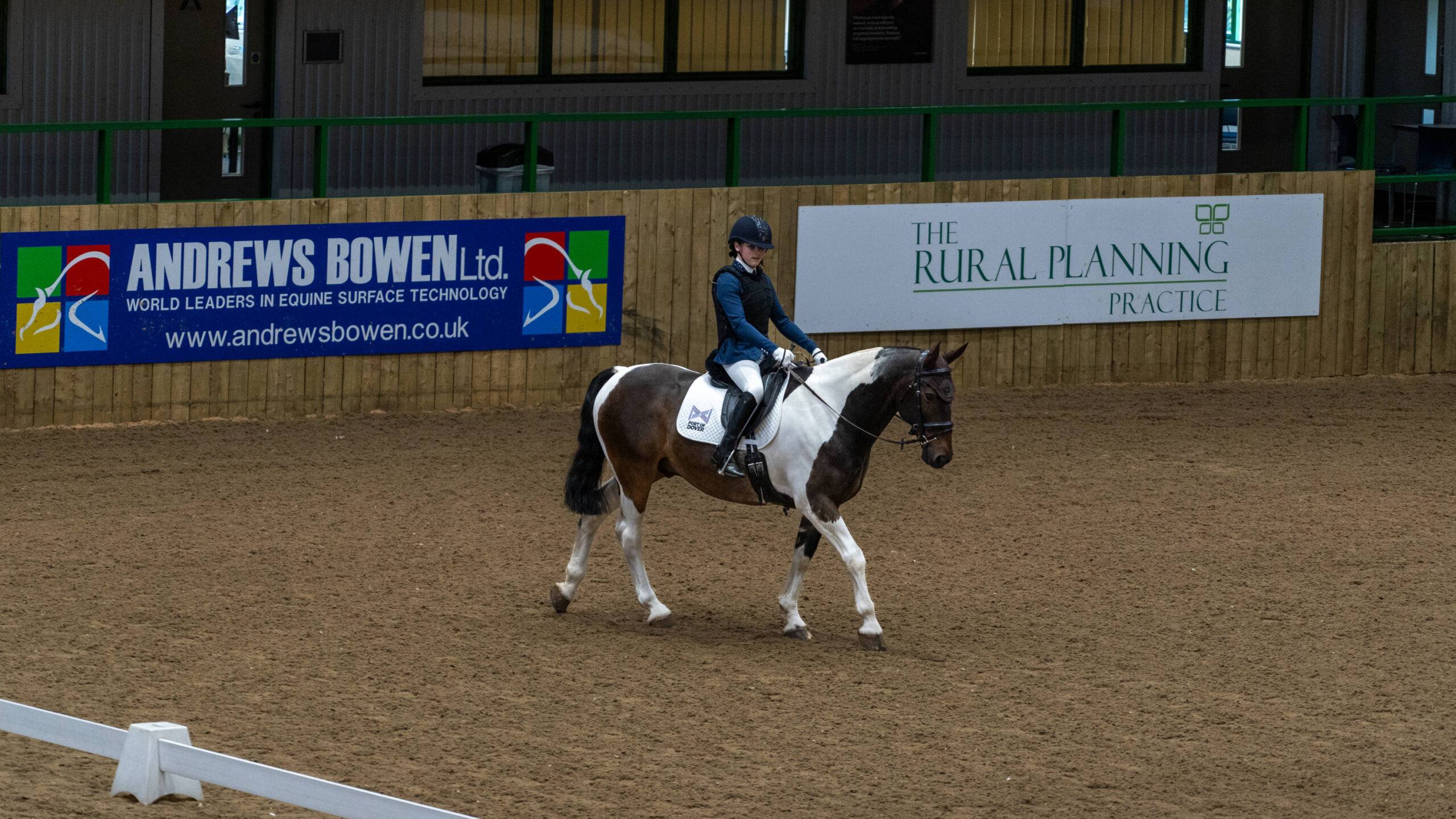
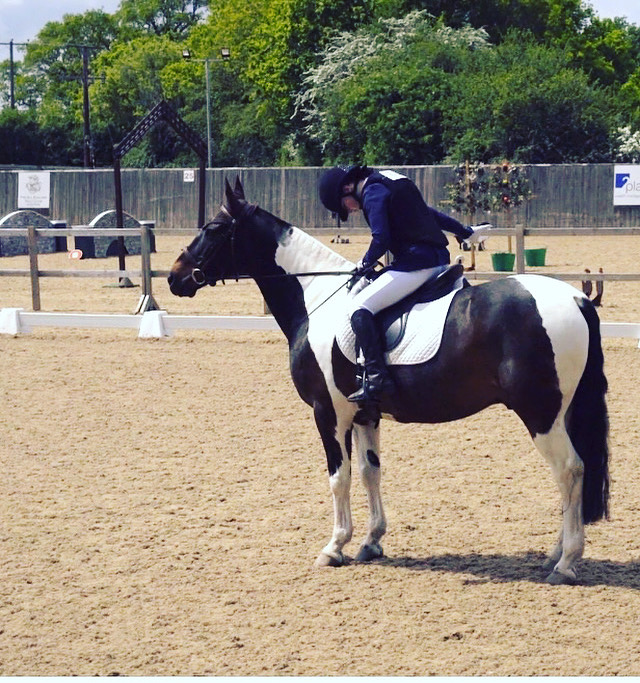
Former Folkestone Academy student, Kaela Cheffins‘ goal is to compete for the Team GB Paralympics Dressage. Born with Cerebral Palsy, horse riding was a form of exercise and physiotherapy that helped to build her core muscles and focus on her posture, balance and coordination, from the age of two. Now, at University, Kaela is sharing her focus between her studies and getting onto the Team GB Paralympics Dressage squad. She’s qualified, for the second year running, in 1st place in her classification in the UK. Folkelife met up with Kaela, with a carrot for Paxman, her horse.
“My body works differently to an able-bodied person, and walking is, well, I don’t walk in the same way. But when I am on a horse, I am using a lot of the same muscles as I would to walk. Having Cerebral Palsy (CP), there’s part of my brain that’s dead or partially damaged. Bits work here and there, and it affects different parts of my body. Take my legs, there is muscle tone there, but I have difficulty walking.”
cerebral palsy and me
“CP affects my upper body too, and I can only control half of my face. When I was younger, it took me ages to learn to move my eyebrows, and I can only wink with one eye. You wouldn’t notice it to look at me, but there are a load of differences there. But the further down my body you go, the worse it gets. I’m diplegic – so two of my limbs, my legs, are worse than my arms. If all four limbs were severely affected then that would be called paraplegic.
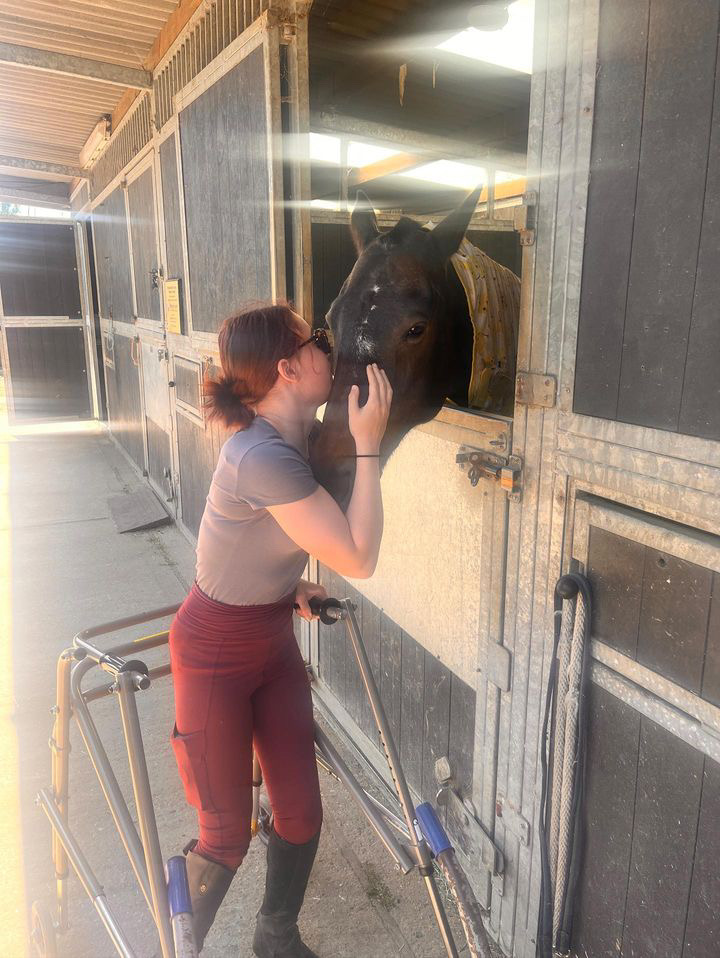
“I can walk unaided, but have used a K frame since I was really little. I also have an electric wheelchair which I whizz around on. Some say I have a taste for danger as I’m always flinging myself here or there! I can use crutches, but I don’t when I’m out and about as it would take one knock from someone else and I’d overbalance and, well, it wouldn’t be graceful!”
working at the gym
“Although I use my wheelchair daily, and certainly for long distances, it’s really important for me to spend time at the gym. If I don’t use it, I’ll lose it and I don’t want to lose the capacity to walk. My brain injury won’t get worse, but how my body deals with the injury can change, so I need to be as fit as possible. When I was younger, I didn’t have much flexibility below my knees, so moving my feet and ankles was hard. But with physio, I have managed to build up some movement. However, in order to flex my ankle, I also flex my wrists! It’s not an isolated body part movement!
“Horse-riding has been brilliant for me though. I have to admit, when I first started I would scream and scream, which wasn’t so good for the horse. But something clicked when I was around four years old, and since then it’s been horses, horses, horses.”
london 2012
“I can remember watching London 2012 and seeing there were disabled people like me competing at that elite level. Usually, you don’t see much representation of disabled people in sport. I thought then, that’s what I want to do.
“The horses were riding around a giant sandpit, making pretty shapes, which was lovely! My favourite is the freestyle to music. We have a set list of movements, and dance to music of our choice, and I love it. Some people want to be in the Army, fight for their country, I want to do this for the rest of my life.
“To be on the international stage, riding my horse, and showing everyone what can be done, you never know, there might be another little Kaela somewhere watching. And if she can see that I can do it, then anyone can have a go.”
Alkham Valley RDA community club
“I ride in Dover at the Alkham Valley Community Club which is a registered RDA (Riding for the Disabled Association) site. We work with children and adults who have physical and learning disabilities. I work here, and have volunteered here, and ride here and met some wonderful people. The horses though are my best friends. I find I get on better with the horses than most people.
“I am a nationally classified paralympic athlete. You have grades from one to five, one being the most impaired and five the least. I am a grade two, so I’ll only compete doing a walk or trot with Paxman. In order to compete in the Olympics and other international competitions, I would have to be reclassified by the international federation, the FEI. “
paxman – peace
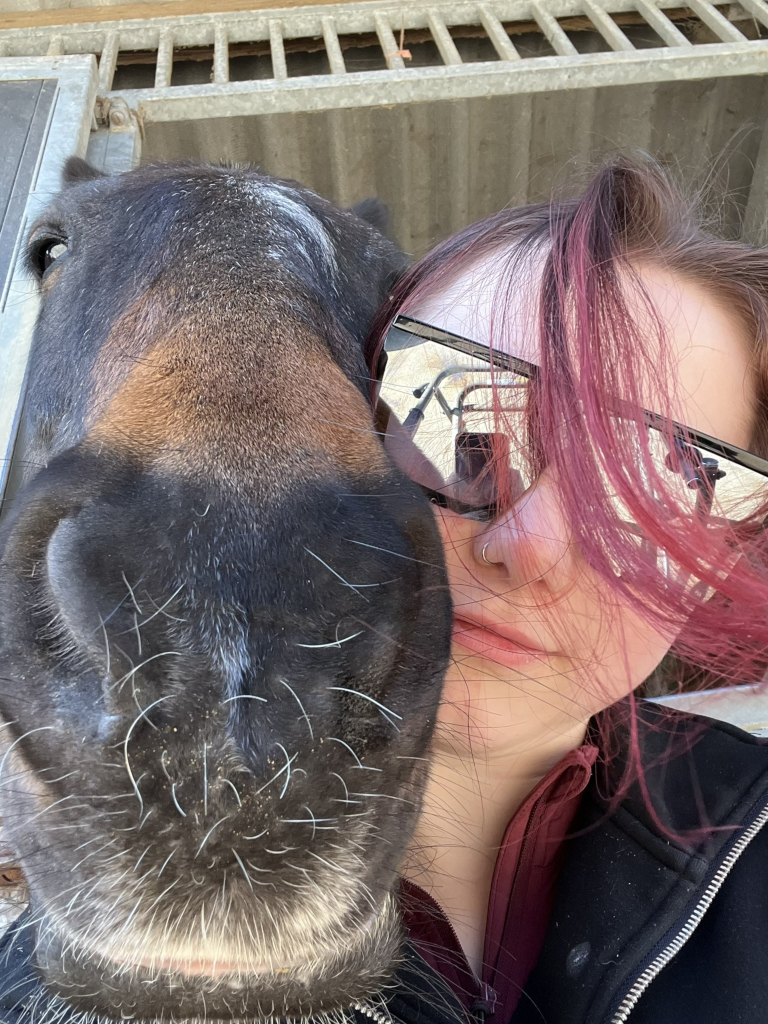
“My horse is Paxman, which means Peace in Irish, and he’s from Ireland. He’s about 15.1, 15.2, and I am 5ft4 on a good day. So, if I’m standing at his withers (the shoulders), no one can see me from the other side. Paxman is an incredibly soppy, lovely boy. He loves cuddles, and has a wonderful temperament. He’s also quite slim, which is good for me. My muscles around my hips are tight, so if I sit on a wider horse, I could dislocate my hips, which isn’t good. Getting your legs around the waist of a horse is an important factor to consider, and Paxman fits, so that’s a good thing!
“We’ve worked out that a more sensitive horse suits me as they can pick up on more of the intricacies in my body. However, you don’t want a horse that’s too spooky and sensitive as that can be dangerous.”
british dressage
“Currently I ride at RDA level, but we have looked into riding at the British Dressage level, and that’s what then takes you onto the international level, and then to be considered for the Paralympic squad. The main issue is money. Most of the competitions happen in Gloucester during the summer months, and then further away in Preston in the winter months. I’m better in the summer as it’s warmer and my muscles work better then – unless it’s too hot! But in the winter, it’s much harder for me to get going.
“To compete however, you need to bring your horse, your trainer, your coach, and my parents (one or both, depending) need to come too. Driving is stressful for the horse, and so you need to allow time for Paxman to settle in the new setting once we arrive. What could be a six or seven hour drive, turns into four or five days away depending on how long the competition is. That gets really expensive. All the humans need a place to sleep, and so does Paxman. “
accumulating points
“The more you compete, the more points you accumulate and the higher up the ranking you go. There are regional squads, and each squad needs a choice of different graded riders to compete. You can’t go in with five grade fives, and a grade two, there needs to be a more even spread. The more competitions you go to, the more points you get, but the more it costs.
“Over the past two years I’ve been really fortunate to get funding from the Port of Dover, but now I’m nineteen, I don’t qualify for that anymore. So, I’m looking for sponsorship. If anyone has read my story and thinks they’d like to help me get to represent our country in Paradressage, then please get in touch via my Instagram.
“My riding helps bring awareness to others with Cerebral Palsy, and also shows just how capable I am of doing anything. I’m really competitive, and I want to show you what I can do, prove people wrong about those with disabilities. This is my passion.”